Everyday Magic
Books, love, and the bread crumb trail of associative thoughts.


A few days ago, Laurie sent me a piece I’d posted on Facebook three years ago. I was writing about Ben Okri’s novel The Famished Road and the memories it stirred of the years I’d spent in Bury, Lancashire as a child in the 1950s. This is the post:Ordinary
I have finished reading The Famished Road (1991), Ben Okri’s extraordinary novel about a child growing up in Nigeria, as the country becomes an independent, modern state—yet one still suffused with Yoruban magical thinking. In the child’s way of seeing, the imagined world and the real world are not distinguishable. Life is experienced as a form of magical realism you don’t wake up from until adulthood.
I have no direct connection to this world, and yet through my memories of childhood in Bury, Lancashire, I feel a common sense of the phantasmagoric. In 1955, when I was five, I caught a virulent form of chicken-pox and fell into a delirium. The delirium produced synesthesia and intense hallucinations. I could smell words and hear shadows.
It occurs to me now that our move from Leicester, in the midlands of England, to a working-class, northern town was a form of time travel to me that was disorienting. Leicester was a town on the way up. Our new, semi-detached house was in a suburb. Under the Labour government, a visiting nurse pulled up to see us in her Morris Minor, dispensing rose-hip syrup and orange juice. My siblings and I went to the state-financed nursery school from the age of three. All that came with being “Bevin’s Babies.”
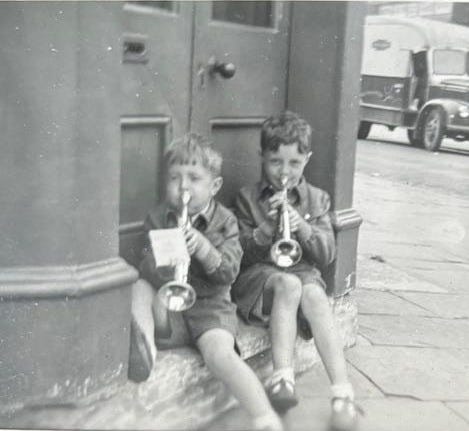
Then we moved to Bury. Owing to tradition and neglect, this town was still largely a relic of the 19th Century. The dark satanic mills still produced cotton, leather, and steel. The streets were cobbled, as were the school playgrounds. The streets were lit by gas lamps. Brewer’s dray horses delivered beer to my grandfather’s pub. Mill workers wore wooden clogs. Men wore flat caps and the women wore knitted shawls. I was taught to write at All Saint’s infant school, using a metal stylus and scratching on a wood-framed piece of slate.
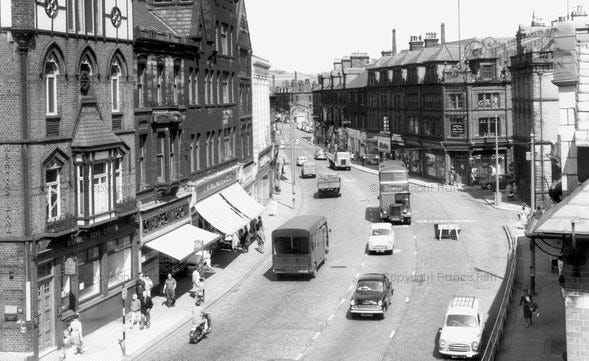
The adjustment to this reversal of time was probably more disturbing than I realized back then. Adults spoke a language (actually, they just used an accent) I could hardly understand, and the local kids thought of us children from the south as having “had it soft.” It was also a place of happy memories and love, the sound of singing from men in the bar and women in the snug, wafting up the stairs as I lay in my bed. I have a vivid memory of first seeing the cobbled school playground that sloped down to the canal, green with slime, and thinking this is no place to play.
Reading Okri, I rediscovered the meaning of magical thinking in my own life as I was discovering it in his. I keep finding connections to the ways the real and the magical were fused in my experience. My dad, a most reasonable and rational person, comes from the place of stability. With his background in Leicester, he radiates post-war optimism. My mother, born in the Bury she returned to less than a decade after leaving it, is the one who told me fairy-stories and stories of ghosts she’d seen, especially the ghosts of friends who’d died in childhood of diphtheria and scarlet-fever.
Both these forces were inside me. No wonder then that in the delirium I experienced in the upstairs bedroom at 22 Tottington Road, I saw ghosts from the 19th Century emerge from the walls on both sides of the bed, the women wearing long black skirts, the men in long black coats. In a continuous procession, these figures walked solemnly toward me, dived into my chest, and stayed there.
≈≈≈≈≈≈≈≈≈≈≈≈≈≈≈
As chance would have it, when Laurie sent me the piece above, I was reading Culture and Society: 1780-1950, written by the great theorist of the English class system, Raymond Williams, and first published in 1958, around the time I was living in Bury. I was at the point where he was writing about D. H. Lawrence and the coal mining town of Eastwood, Nottinghamshire, where Lawrence grew up. Williams writes: “Lawrence was so involved with the business of getting free of the industrial system that he never came seriously to the business of changing it.” Nevertheless, Lawrence always condemned industrialism and much of the way of life forced on those who lived in its wake. Williams further says of Lawrence: “ . . . the industrial system was so strong, and he had been so fiercely exposed to it, that at times there was little that he or any man could do but run.”
Lawrence was running away, not just from industrialism, but also from the British class system. Williams was, of course, also writing about his own life, growing up as the son of a railway worker in a Welsh village, who escaped to read English at Trinity College, Cambridge. For Williams (and me, too) escape is not a clear-cut rejection. There’s sentiment and longing in all sorts of forms of the life left behind. Williams writes of Lawrence’s upbringing: “. . . in such a life, the suffering and the giving of comfort, the common want and the common remedy, the open row and the open making up, are all part of a continuous life which, in good and bad, makes for a whole attachment.”
Yes! All this is recognizable to me. During my few years in Bury, from age five until about age seven or eight, mainly I was sheltered from the privations of working-class life, being too young to register them. I was left with love for the communal warmth of working-class culture and haunted by the ghosts of its passing. Maybe I have always run toward it and away from it at the same time. I think Lawrence did as well.
Last weekend, I’m still reading Williams and still thinking about Lawrence and my time in Bury, when Laurie and I host a writing workshop, and this is what I produce from the prompt: “A phone call you had with someone who is dead.”
Sun and Cloud
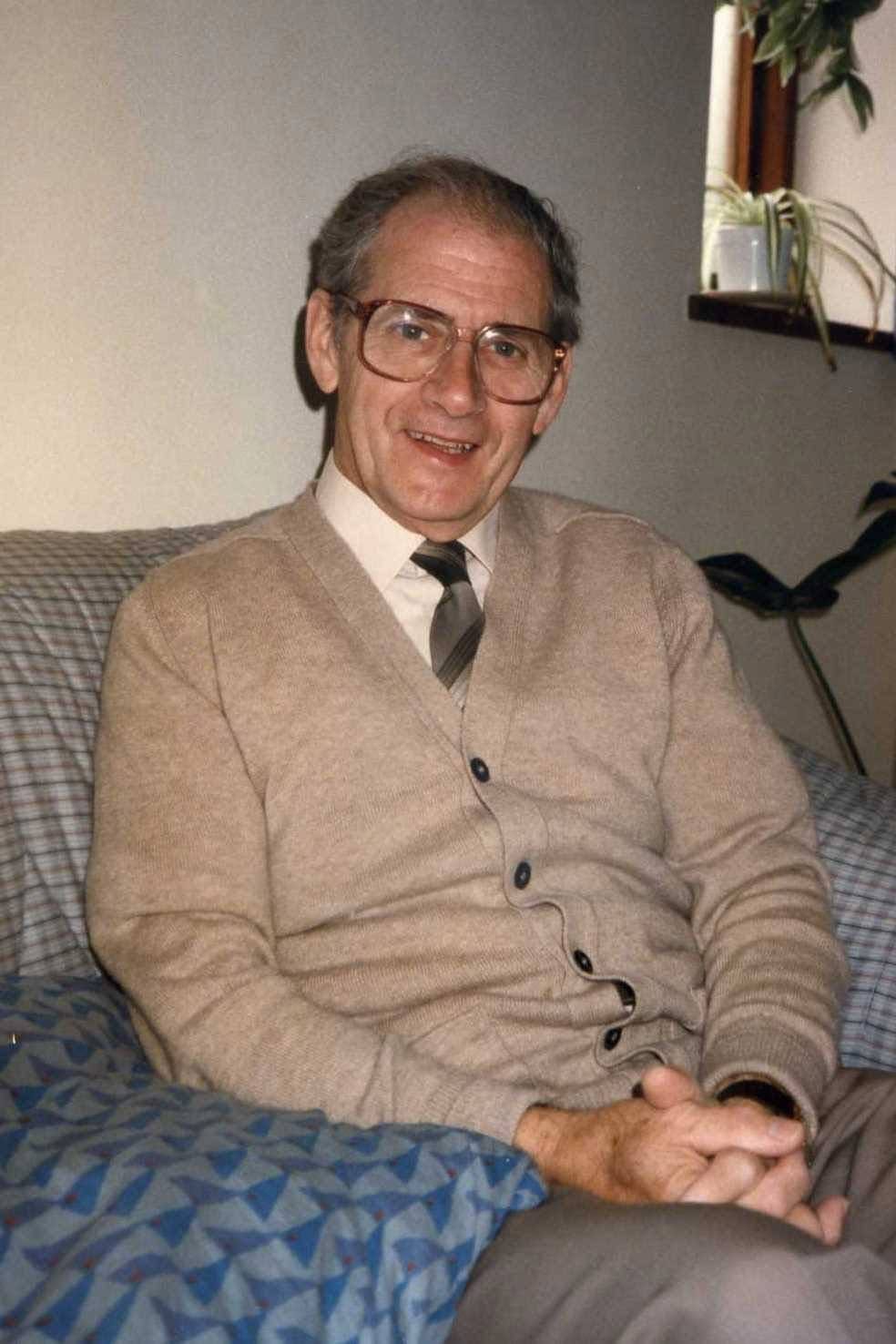
Dad called my cell phone. He died a week later. I think he called to say goodbye, a forever kind of goodbye. I was in Scottsdale, at the restaurant Laurie and I went to most Fridays. The manager knew which drinks and hors d’oeuvres to send to our table. We’d finished and were leaving the darkness of the bar and the A/C and stepping into the harsh light and heat outside, when the phone rang.
We’d only been back a few days, after seeing Dad in England. When I’d asked his doctor how long he’d got, the doctor said, “How long is a piece of string?” I hated him for saying that. In the carpark of the restaurant, it was over a hundred degrees. Laurie hated Arizona. She said it was always over a hundred degrees and too hot to make friends. I said, “Sit in the car. Turn on the a/c on. I won’t be long.”
I stood in the shade of a line of orange trees. I remember the smell of the oranges, my linen shirt sticking to my skin, hummingbirds buzzing, darting, and hovering, from blossom to blossom. I hated them for acting like rush hour traffic on the 101.
Dad said, “How are you in yourself, son?” That question would always be his opening line, just six syllables, an existential question with no answer. He was a patient man, asking the question, but never insisting on an answer. He was dying and knowing he was dying, still asking me how I was doing.
A key was in the words “in yourself.” I didn’t know where that was. He said, “Your mother doesn’t know what’s happening.” He hadn’t told her for over a year that he had fourth-stage cancer, with a tumor in his stomach the size of a grapefruit. He hadn’t told his doctor either, until it was too late. Mum was in the same nursing home as him now, and as far as anyone could tell, she was happy in her dementia.
I didn’t ask the obvious question, like how long did he think his piece of string was now. We both knew the answer was not long, not long at all. I think we were both aware that this was our last conversation, and thinking of it now, it all comes back, not just the orange blossoms and the hummingbirds, not just Dad close to death, all of it comes back, Dad at every age and the attachment I felt when he was alive and still do. He sounded frail. He said my brother and sisters came by regularly. We didn’t talk for long at all. He rang off in the usual way, “Cheerio, son, cheerio.”
I looked up at the deep blue, cloudless sky. The sun showed no pity. I thought of Dad back in England, under clouds. In his bed, in the hospice wing of the old country house. Outside it was probably raining.
When he last visited Arizona, each day he’d look out of our kitchen window and say, “Another lovely day.” In Arizona that made sense to my Dad, heat or not.
When my sister emailed to tell me he’d died, I didn’t cry, I never cried. The humming birds got on with their work liked nothing happened. And the day repeated itself like nothing happened, and the sun beat down like nothing happened, except it felt a little hotter.
______________________________
THE DIFFERENCE BETWEEN MEMORY AND STORY. The next Zoom conversation on Saturday May 30 from 3 to 4 EST. To RSVP: lauriestone@substack.com
Here’s a little teaser for the conversation by Laurie:
Most of the time we store MEMORIES, even memories of pain—and maybe especially memories of pain and loss—for consolation. And the memory, if you tell it to yourself, comes out often (if not always) with a cast of heroes and victims--the hero who was a victim is perhaps the most common template. That is what memory is. A STORY, even if it’s based on a memory or what you think is a memory, has to be a different sort of animal to seduce readers.
Richard and I will offer you our understanding of the difference between a STORY and a MEMORY. We will do this step by step, no secrets withheld and all tricks of the trade revealed at our next ZOOM CONVERSATION ON WRITING CRAFT ON SATURDAY MAY 30 from 3 to 4 EST. Your questions about your own projects are welcome.
To RSVP, email: lauriestone@substack.com. The ZOOM conversations are free to paid subscribers, and hercurrent e is a link with a discount to become a paid subscriber to this stack. All Paid Subscribers are welcome to sign up for the Zoom for FREE, and huge continuing thanks for your very cheering support.
_____________________________
Happenings for paid subscribers
UPCOMING GUEST ARTISTS on ZOOM, always on Saturdays from 3 to 4 EST To RSVP: lauriestone@substack.com
LAURIE & RICHARD, on the difference between Memory and Story, May 30.
To RSVP to these events, please email me at: lauriestone@substack.com.
To attend one event or receive one recording, with no future payment obligation, you can buy a “coffee” for $4 at ko-fi.com/lauriestone
Breakout sessions following the Zooms with guest artists
The BREAKOUT SESSION following Marga’s Zoom is on SUNDAY, APRIL 26 from 3 to 4:15 EST. THERE ARE STILL PLACES. There is a cap of 10 at each breakout. You are invited to share a piece of your own writing of around 400 words. The SLAM readings are thrilling impovs—we make a work together larger than the parts! The fee is $30. To sign up please email me at: lauriestone@substack.com.
There will also be a BREAKOUT SESSION on June 1, following the Zoom conversation on the difference between “memory” and “story.”
To request recordings of past Zoom Conversations
with Steven Dunn, with Margo Jefferson and Elizabeth Kendall, with Francine Prose, with Sophie Haigney (of The Paris Review), with David Cale that includes a reading from his hit solo theater piece Blue Cowboy, with poet David Daniel, with Daisy Alioto, and with Michael Klein, please email me at: lauriestone@substack.com.
_____________________________
Please “like,” “comment,” and “share” this post. It helps the algorithm recognize me and connects me where I need to be!

Your tender father!
I love especially the structure of this post and the way you have made all the stages and steps of gathering the parts into a narrative that takes place in the moment of creating it and not in the moments that are summoned in memory and stories that are presented as memory by the narrator. I can tell readers, for example, the phone call from your dad did not take place outside the restaurant in Arizona. Cheerio!