Folding the Carpet
and other stories in time.

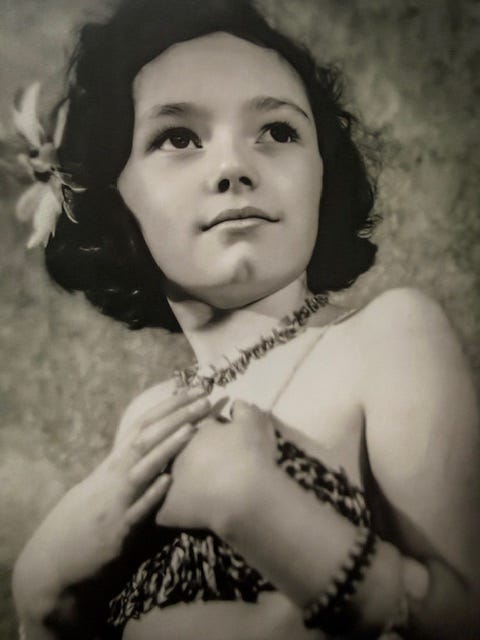
HENRI-LOUIS BERGSON, THE FRENCH PHILOSPHER, who lived from 1859 to 1951, said time as we experience it is not a set of separated intervals but a tune where the notes that have already played continue into now. They create the expectation of what’s to come. Bergson married a cousin of Marcel Proust, and Proust was best man at his wedding. You can see how the time thing worked for Proust. Nabokov, too. He loved Bergson’s idea of “pure duration,” and Bergson wrote that time: “. . . might well be nothing but a succession of qualitative changes, which melt into and permeate one another, without precise outlines.” Nabokov met Bergson and considered him one of his favorite writers. In Speak Memory, Nabokov wrote: “ . . . I do not believe in time. I like to fold my magic carpet, after use, in such a way as to superimpose one part of the pattern upon another. Let visitors trip.” By “visitors,” he means readers.
It’s some time in the 1950s, I’m not sure of the year. Dad is driving the family to our usual Sunday afternoon outing. We are always going to one or other of Dad’s friends from his time in the war. Each family is just like ours. We could be on our way to Jack and Bernie’s or Ray and Gwen’s. I’ve forgotten the names of their children. Just like us, each family has three kids. All the fathers are de-mobbed RAF Artillery mates. In all the homes is furniture identical to our furniture, affordable owing to the National Utility Furniture Scheme for newlyweds and anyone who was bombed. The scheme continues until 1949. The couples were all newlyweds. I thought they were grownups, if I thought of them at all. The government continued to ration goods well into the 1950s. I remember seeing my first orange and a little later my first banana in a shop. Mum explained how to peel and eat them. I remember these exotic fruits displayed in a supermarket, but there weren’t any supermarkets then. The magic carpet of memory produces its patterns.
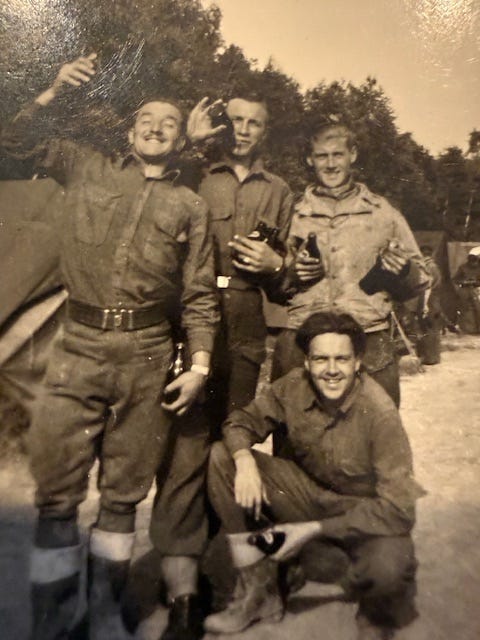
The men reminisce about their part in the Battle of the Bulge. Jack saved his chocolate ration for weeks. Then he found himself cut off behind German lines with Dad and the others, in the snowy forest of the Ardennes. They were starving, so Jack finally opened his bar of chocolate only to find it had gone rancid and was inedible. The men would laugh with each retelling. What was the moral of the story? Eat your chocolate when you can? Don’t save up pleasure because you never know when you’ll cross out of safety? I lived that way. Children live that way. I think I still do, except for new clothes. It takes me a bit of time to wear them.
After the chocolate story, the men would laugh about how the American soldiers had swapped their warm sleeping bags for their thin British blankets, because a rumor had circulated that Germans were bayoneting GIs struggling to undo their zippers. Ray said, “Which choice was better, frozen or dead? During that winter, the answer wasn’t obvious.” And what of the women, the wives, as they were called? I remember them serving us kids McVities’s digestive biscuits arrayed on a cake stand.
As a kid, I found these stories funny because it felt like sharing the world of adults and especially the world of my father, always a mystery, the inside of him, always I was happy to peek into anything that gave him pleasure. Dad’s smile at the time looked happy, spending time with friends. Now, I think he was just happy to be alive. Perhaps it was both feelings. I can do anything with yesterday, according to the whims of today. The folding curtain of time can always predict a new past.
I was reading “Other Minds,” an essay by the philosopher J L Austin. I was attracted to the title, maybe, because earlier that day I’d said to Laurie, “It’s difficult to know what anyone is thinking because you don’t have access to their minds. We have to guess what is going on, and very often we get it wrong.” This is a principle that Laurie and I agree on, especially not knowing what the other one is thinking. Austin’s essay turns out not to be about other minds in any direct sense, but the general issue of claiming “to know” anything. Austin argued that we might not know what anyone is thinking, but we can’t doubt that they have minds, for it’s an essential part of our experience of life.
What I like about this essay is the way Austin makes you think about how philosophers ask questions in a way no-one else would, because there’s not really a question to answer. If life requires us to know other people have minds, there’s really nothing to question. He suggests, in a footnote, it’s like a magician asking a volunteer to inspect a hat and affirm, “Whether it’s a perfectly ordinary hat.” The volunteer has to say, “Yes, it’s a perfectly ordinary hat” because there aren’t un-ordinary hats.
Among the stories my mother told about herself is the one where she’s recruited by a scout to be a dancer at London’s Windmill Theatre. This theater was famous for variety shows and tableaux of nude women in motionless poses. When I was a kid, I thought, sure, Mum, no chance. Now, I’m thinking maybe she was telling the truth, but a different kind of truth.
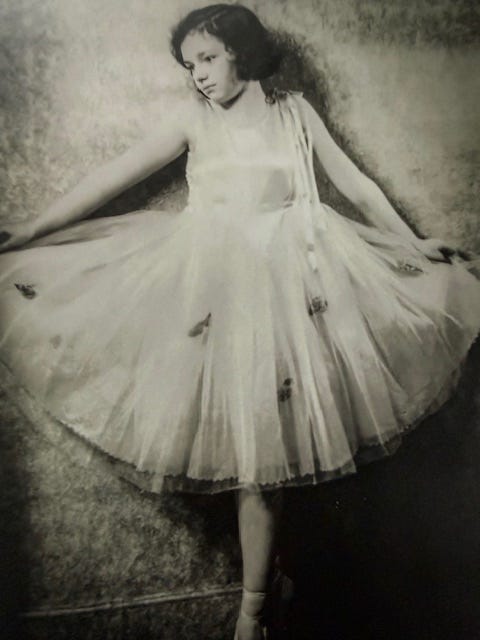
Back then, there was an official censor in theaters, and it was decreed that “If you move, it’s rude.” This was based on the theory that while the city was full of nude statues of women that didn’t move and they weren’t rude, “Living statues,” couldn’t be banned either. The curtain would rise on naked women frozen as mermaids, American Indians, and Britannias. Pause, pause, then curtain down. Also on the bill were normal moving comedians and dancing girls. My mother said she’d auditioned to be a dancer, but who can tell what lurks in the mind of a Mum, or anyway my Mum?
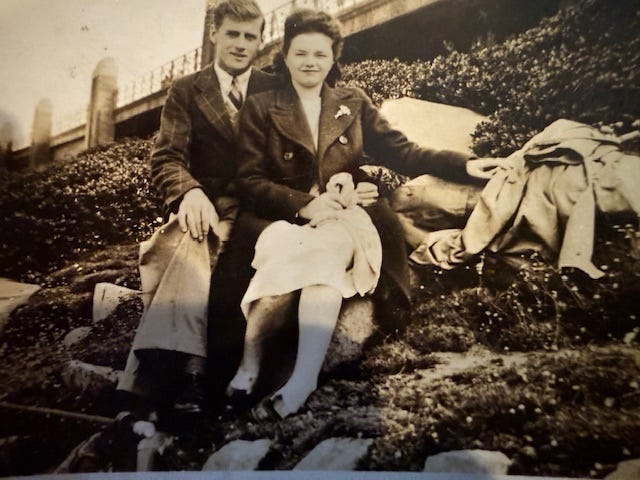
My father didn’t dispute this story, which he sometimes did with mother’s farfetched tales. What makes it more probable is the fact that Mum lived in Blackpool during WW2. During the blitz, with theaters closed in London, many companies decamped to Blackpool. The government considered it unlikely that Germans would bomb it, and as a holiday resort, there were plenty of places to stay. Holiday-makers kept going there during the war, and the government backed it to boost morale. The town received 4,000 relocated civil servants from London, 38,000 evacuees, and 45,000 airmen, including my dad who was sent there to learn to drive. He met my mother, Sylvia Brooks, in the Tower Ballroom, and he proposed to her shortly after. The town was bursting with entertainers, singers, dancers, bands, and leading British stars of the time, including Noel Coward, Robert Donet, John Mills, Flora Robson, and so on.
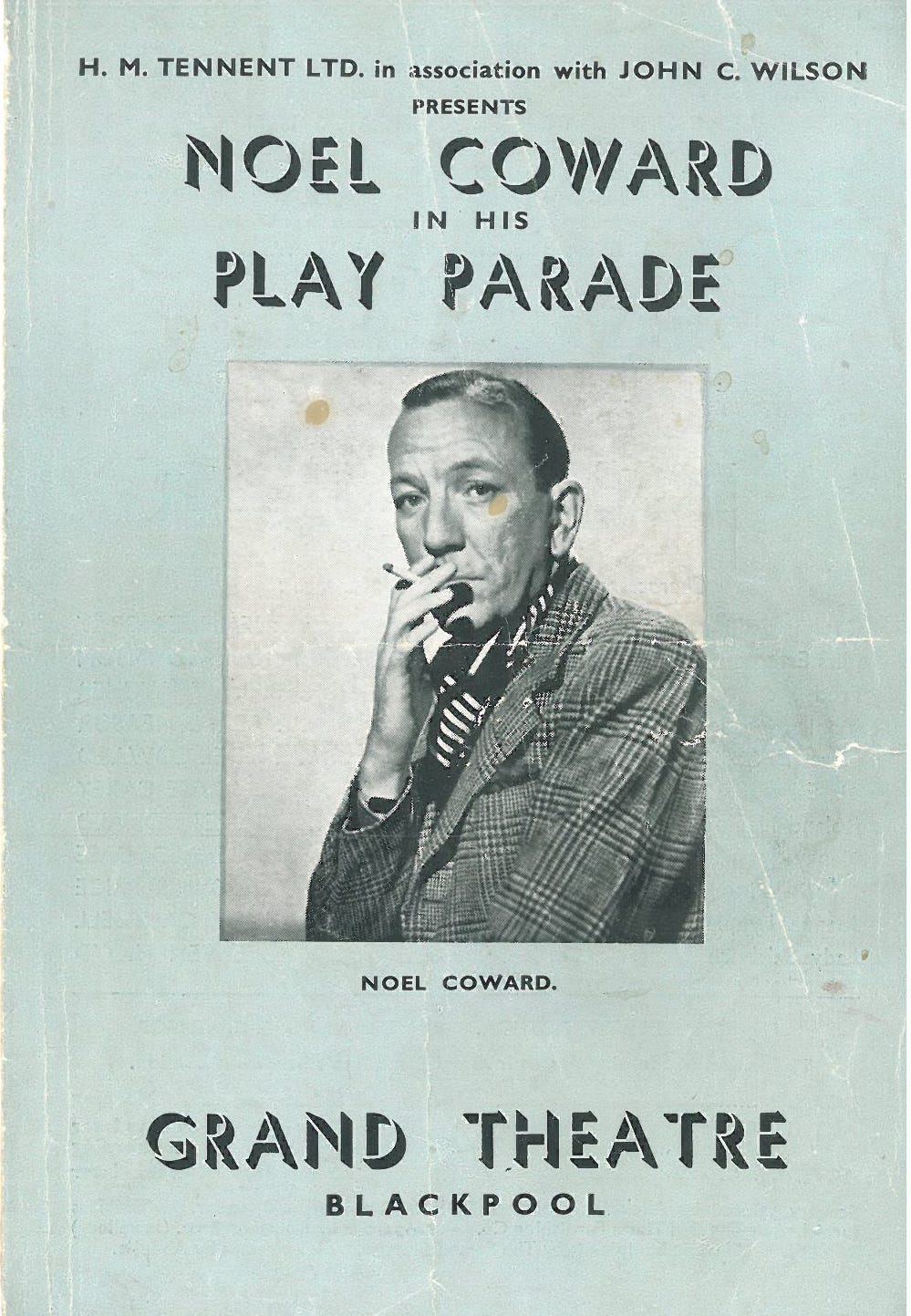
It’s not surprising then that my mother, who was a keen amateur dancer, might have been recruited, except The Windmill didn’t move from London, nor did it close during the Blitz. In fact it famously claimed “We never close” and was reputedly the only London theatre not to do so. Maybe a scout was in Blackpool, looking for talent? I think my mother had that. Good for you, mum. I hope the story is true.
You certainly wanted more from life than the life you lived. Maybe you were recruited and for one reason or another, you never made it to the audition. Maybe the trains stopped running during an air-raid. Maybe your parents stopped you or—I hope this isn’t true—your soon-to-be-husband disapproved. Maybe you couldn’t get permission to leave your office job at the Ministry of Trade. I have decided you did go and you did dance on stage for a while before returning to Blackpool. I have decided you had that adventure and the adventure stayed inside you as a piece of “pure duration.” There’s no one left alive to say it didn’t happen other than me and I believe that, yes, it’s a perfectly normal hat.
_______________________________
Michael Klein, our next guest artist Saturday March 28 from 3 to 4 EST. To RSVP: lauriestone@substack.com
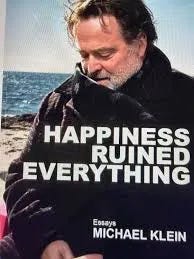
The other day, Laurie and I were speaking with Michael about things we might want to talk about, and it was so much fun, we wound up having a mini-hangout together. Here are some elements of craft and form Michael will talk about:
The difference between poet brain and the prose brain.
Writing when he’s happy and writing when he’s unhappy.
The pleasure of writing about figures in his life who have given him joy and showed him how to have a life, among them Adrienne Rich and Jean Valentine—“Adrienne made me want to be a poet.”
How teaching writing makes you a better writer.
Being an addict. Some things he’s learned, among them the “unseen” parts of life Rilke talks about, a key to the sense that reality is not the only reality, there’s something more in our existence.
“Art is where you learn how to live.”
Why his latest book of essays Happiness Ruined Everything is organized as “devotions,” and not with a table of contents.
Different ways of to publish work outside the traditional big-five publishing houses.
______________________________________
Thanks for your support. We’ve now been together nearly a year!
Thanks so much to the subscribers who are paying for this publication. It’s true, you don’t have to pay to read it because I want to attract the largest and most varied population of readers I can. You don’t have to pay to read the stack, but if you enjoy it, value it, and have not yet taken a turn at support, please consider making today the day you jump in. There is a discount for new subscribers and a place at all the Zoom conversations with guest artists I host with Laurie Stone.
You are the only funding source for this work. Make sure to use a browser on your phone or computer, and not the Substack app.
Please “like,” “comment,” and “share” this post. It helps the algorithm recognize me and connects me where I need to be!
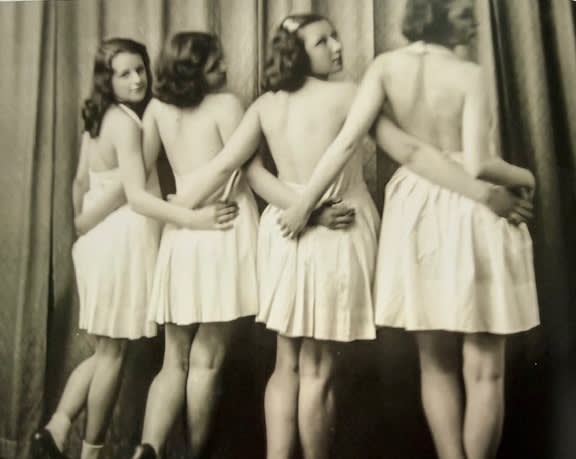
A beauty for the duration.
Cheers to wars that do not happen, to everlasting chocolate bars, to our dads who fought, and to our moms and their days of dancing. There's a whole world in this piece.