Regretting the future
and looking forward to the past.

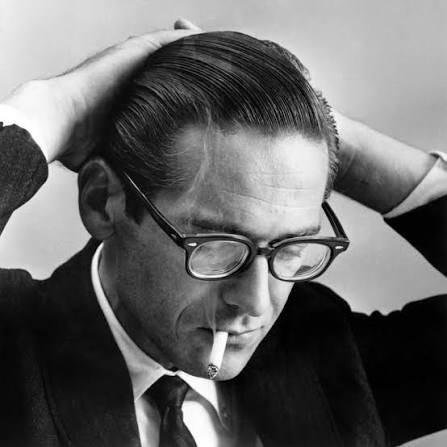
When I was younger I had a recurring dream that I could play the piano like Bill Evans, except my fingers would tighten up as I was finishing a run of notes. Then I would be me again, with no knowledge of how to play the piano. When I moved to New York City in the 1980s, I bought a keyboard with the intention of learning how to play. I did not take lessons or buy a teach-yourself book. It’s many years later. I practice every day. I have many books and follow an online course without missing any instructions. I still can’t play, and It makes me smile that my fingers can’t make the simplest run. It’s not the arriving, the much-repeated chant goes. It’s the getting there.
I don’t feel defeated. You might think I would after lugging around the keyboard for thirty years. I now have all the time in the world to enjoy the surprisingly slow progress I’m making. My original keyboard was a Casio, one of the first to have midi capability. It’s become a collectors’ relic. I recently bought a much fancier keyboard, a Roland with 81 keys. Beside it, at a right angle, I have the original, 66-note keyboard plugged in. A new stand arrived yesterday. I’ve set up the Casio for old time’s sake. It looks like a studio or something. I like the Casio sound. It’s a time warp of tones from the 1980s. Where I used to live.
The other day, as I was clearing up papers on my desk, a page slipped from a cluster in my hand. It was a review, with the title “Now and Then,” from the February 5th edition of the London Review of Books. It was a review by Thomas Nagel of Samuel Scheffler’s book One Life to Lead: The Mysteries of Time and the Goods of Attachment. If I believed in Jung’s idea of synchronicity—and I don’t—I would say this was a moment of what Jung was talking about. Scheffler’s argument, summarized by Nagel, is that, “We feel guilt, shame, remorse and pride about what we have done, not what we will do; we feel hope and fear about the future, not the past; our appetites are directed forwards, not backwards.”
Scheffler doesn’t consider the category of pre-regret. Let’s not pull on that thread for the moment and get back to me. Here’s the thing. When the keyboard sat around, untouched and gathering dust, when it stared at me with reproach, I imagined just the sort of slog of a future I’m living now, at 75. I find I can’t concentrate as well as I did even a few years ago. Before I started learning, I was future regretting, pre-regretting. Scheffler argues you can’t regret a future that hasn’t happened yet. Maybe not in strictly logical terms, but where is the fun in limiting yourself to propositional logical? Our minds aren’t logical when we imagine salvaging a past of procrastination from a future pocked with shoulda, coulda, wouldas. In the past, when I had better mental abilities to learn, I put it off. Now, by practicing every day, I’ve not only sanded the regrets I formerly imagined, I’ve salvaged the past as well. I’m no longer a person who never tried.
I still read books by philosophers, but differently than when I started as a student of the subject in 1973. The people who taught me then were men (all men) who were students of Wittgenstein or deeply influenced by Wittgenstein. I soon learned that when the moral philosophers among them appeared to be talking about real emotions, they were mainly examining sentences to see if they made (logical) sense or not. We—ordinary mortals and poets—are easily confused and bewitched by the words we use. The job of the philosophy of men like Scheffler is to unconfuse us.
Scheffler is concerned with what he calls the “temporal dissonance” produced by being eternally stuck in now—thinking about past and future and excluded from both. I have to say, I like it that way. I particularly like the now I’m living, despite all that’s going on around me. I feel guilt about that and lots of happiness, too. If Now is Einstein’s trolly car, moving through time, despite everything (and quoting the Grateful Dead), “at least I’m enjoying the ride.”
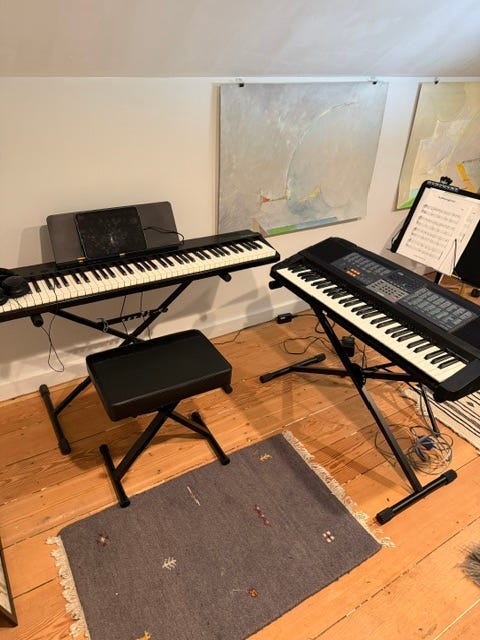
Each day at my new Roland piano, I inch forward, a phrase or two at a time. It’s quite exhausting mentally. I’m hoping for a bit of neurogenesis, if that’s possible. I’m hoping new neurons will make it easier for my left hand to accompany my right hand as we creep along. I look forward to the software egging me on. Tomorrow (I swear), I will hook up the old Casio Keyboard with its 127 tones, 128 magical presets, 128 rhythms, 16 digital effects, and lots of other buttons I have looked at regularly over the years with no sense of what they do. In this sense, my appetites are directed forwards, not backwards, to the place where I will complete that Bill Evans run.
__________________________________
Please support the stack!
Thanks so much to the subscribers who are paying for this publication. It’s true, you don’t have to pay to read it because I want to attract the largest and most varied population I can. You don’t have to pay to read the stack, but if you enjoy it, value it, and have not yet taken a turn at support, please consider making today the day you jump in and help celebrate YEAR NUMBER TWO! There’s a big discount for new subscribers and a place for you at all at the Zoom conversations with guest artists I host with Laurie Stone.
You are the only funding source for this work. Make sure to use a browser on your phone or computer, and not the Substack app.
_________________________________________
LAURIE AND I WILL CONTINUE OUR ZOOM CONVERSATIONS ON WRITING for the next several months, focusing on elements of craft and form you can add to your toolkits as creative writers.
At the last gathering, the focus of the conversation was the difference between “story” and “memory.” What is the difference? Laurie made the claim that a memory could well qualify as material for a “story” if the story was about rethinking the memory. Maybe it didn’t happen that way. Using the baby prompts of “sometimes,” “what if,” and “on the other hand.” I used them in writing today’s post!
The next ZOOM CONVERSATION is on Saturday June 27 from 3 to 4 EST, and it will be about layering in writing dramatic narrative. Something happens in sentence one. “I drove up to the house that looked haunted.” Or “I went into a deli and ordered a pastrami sandwich.” Or “The first rabbit he saw asked him what time it was.” Sentence one reports an action. Layering happens when a sentence that reports an action works as a baby prompt for the narrator to tell the reader what the action made them feel or think or reminded them of. In this way, the narrator is seducing the reader into interest in the narrator’s mind and associations.
Another way to put this is narrative layering follows the requirement of IMPROV COMEDY, that is “YES, AND.” Yes, this thing happened, and it reminded me of and made me feel . . . and then it’s possible to report another action because the story has moved to wherever it’s landed. It’s not planned ahead. It’s being invented in the moment of writing. That’s why it’s fun.
TO RSVP: email me at lauriestone@substack.com.
__________________________________
Please “comment,” ”like,” and “share” below. Your engagement helps the algorithm notice the stack.
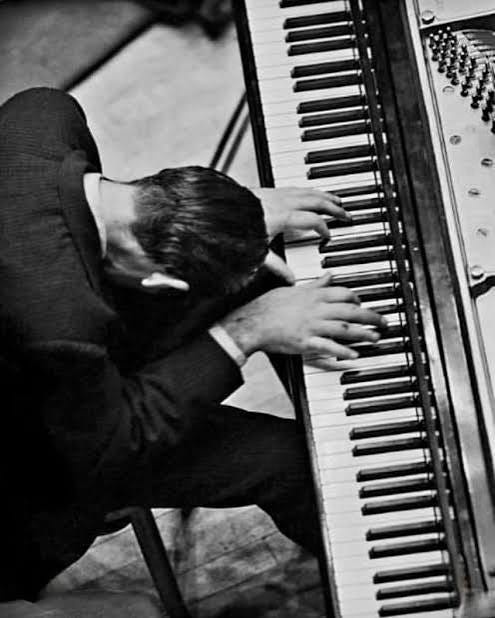
I have already looked forward to having done that.
I adore the concept of anticipating future regret. It’s the whole basis of the future perfect verb tense—I will have imagined you loving me better each day. xxL